

Last Saturday, the Conservatoire National de Véhicules Historiques welcomed the family of British racing driver Les Leston, winner of the 1952 Grand Prix de Luxembourg, for an extraordinary historical visit to Luxembourg. Also present were Ed Goedert, Vice President of the Automobile Club du Luxembourg (ACL) and organizer of the race at the time, and Andrew Notter, Chairman of the British Chamber of Commerce for Luxembourg. The entire day was organized by Tom Sauber, Vice President of the CNVH.

The visit began at the former start and finish area of the race on the Findel. Together with the Leston family, Tom Sauber led us along parts of the historic route towards Neudorf. Using original photographs, precise descriptions of the location and reports from contemporary sources, vivid impressions of the race day were created, on which the then still young Les Leston celebrated one of his great sporting successes in 1952 and crossed the finish line first.

It was a particularly moving moment in Neudorf afterwards. When asked what such a visit meant to him, Nick Leston, the racing driver's son, replied:
"It's very emotional for me to follow in my father's footsteps. My father was a gunner in the Second World War. He was one of the very tough guys - and after the war, these men had to find something that gave them the same adrenaline. For my father, that was racing. When I stand here and see the descent from Findel down to Neudorf, it must have been brutal. Back then, the drivers had small formula cars with very weak brakes and there was no question of safety at all. The photo from this bend hung in my father's house for the rest of his life - and so this picture has been with me all my life. Today, standing right here in this corner, means a lot to me."


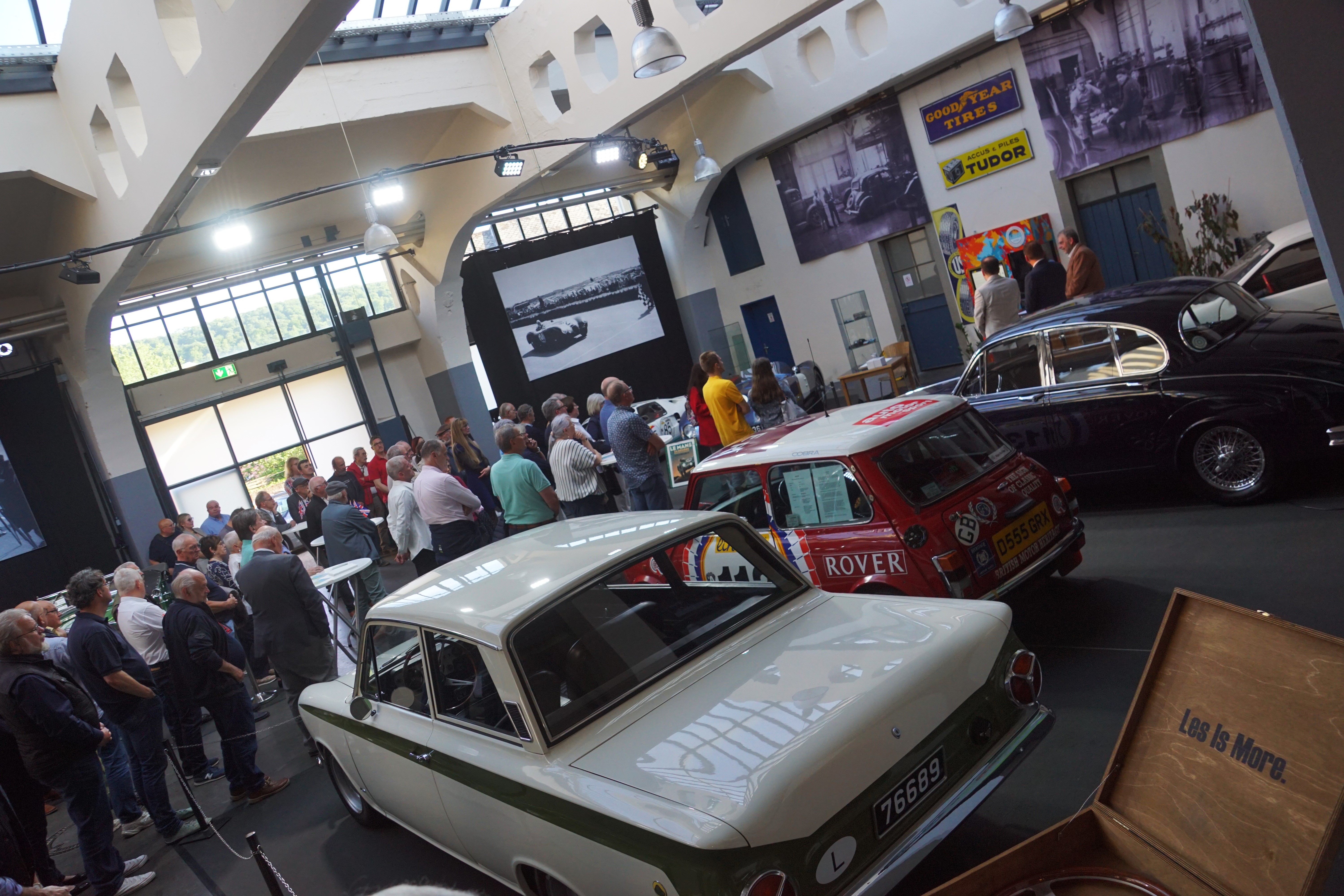
The tour then led to Diekirch to the Conservatoire National de Véhicules Historiques. There, CNVH President Georges Carbon presented the historic Wagner House and explained the museum concept. The highlights of the tour included the Buick belonging to the Grand Ducal family and the Cooper 500 in which Alan Brown won the Grand Prix de Luxembourg in 1951.

Ollie Leston, grandson of Les Leston, then presented the CNVH committee with one of the handmade Les Leston steering wheels that his grandfather made decades ago and sold internationally. The model he brought with him, a "Monte Carlo", was named in memory of Paddy Hopkirk's victory in the 1964 Monte Carlo Rally, a moment that directly bridged the gap between the historical tradition of the Leston brand and its continuation today.


At the end of the day, the group visited Luxembourg Grand Prix historian Goy Feltes, who opened up his extensive photo archive. Many of the pictures shown there had never been published before. For the Leston family, this was the most moving moment of the day: they saw their father and grandfather again in new scenes, some of which they had never seen before - a touching reunion with history that triggered visible emotions.


Towards the end of the visit, Ollie Leston gratefully addressed the hosts and explained:
"Thanks to the CNVH from all of us for a fantastic weekend. We loved it and can't wait to come back in March. All of your passion for your country and its heritage, along with your friendliness, was infectious."
He added with a grin: "What are the chances of closing the roads for a race at Findel?"
During the visit, Tom Sauber emphasized the importance of such encounters: "It is very important to facilitate such cultural exchanges - especially when they fall directly into the context of our work. This creates real added value for both sides. We were also able to learn a lot about our own history today, which had been hidden away in the private possession of the Leston family for decades. Of course, we are happy to share this story; many people are not even aware of how extraordinary it actually is. I am convinced that this will not be the last Visite guidée in the footsteps of the Grand Prix de Luxembourg. It builds a wonderful bridge between nations - and between us and the descendants of the racing drivers of yesteryear. At the same time, it is regrettable that there are no reminders of the Grand Prix de Luxembourg at Findel or in Neudorf today. In the coming weeks, I will therefore be seeking talks with the City of Luxembourg and the municipality of Sandweiler to change this."
This special day not only revived the memory of the Grand Prix de Luxembourg, but also underlined the cultural and historical significance of motorsport for Luxembourg and showed how closely human stories, historical documents and automotive culture are interwoven.
Write a comment